
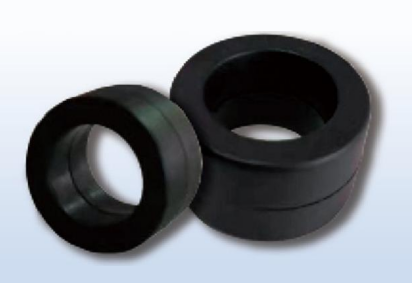
In the rapidly evolving field of power electronics, inverter transformers play a crucial role in ensuring the efficient conversion of electrical energy. One of the most significant advancements in transformer design in recent years has been the adoption of amorphous toroidal cores. These cores have revolutionized how designers approach efficiency, size, and thermal management in inverter transformers. Understanding the benefits of using an amorphous toroidal core for inverter transformer applications sheds light on why they are increasingly preferred in modern power systems.
Superior Energy Efficiency
Energy efficiency is a primary concern in modern inverter transformer design. Traditional silicon steel cores experience higher core losses, which include both hysteresis and eddy current losses. In contrast, an amorphous toroidal core for inverter transformer applications exhibits a non-crystalline structure that drastically reduces these losses.
Hysteresis loss occurs due to the constant magnetization and demagnetization of the core material during alternating current operation. Amorphous materials have lower coercivity, meaning they require less energy to magnetize and demagnetize. This characteristic significantly decreases hysteresis loss. Additionally, the toroidal shape ensures uniform magnetic flux distribution, further reducing energy dissipation and improving the overall efficiency of the inverter transformer.
Compact and Lightweight Design
One of the standout benefits of using an amorphous toroidal core for inverter transformer is the ability to achieve compact and lightweight designs. The high permeability of amorphous materials allows for fewer turns of wire to achieve the desired inductance, reducing the size of the windings.
The toroidal geometry contributes to a low-profile design with minimal leakage flux. This not only reduces electromagnetic interference (EMI) but also allows engineers to create smaller transformers without compromising performance. The lightweight nature of these cores is particularly advantageous in applications such as renewable energy inverters, where reducing the weight of components contributes to better system mobility and easier installation.
Reduced Core Losses and Heat Generation
Inverter transformers often operate at high frequencies, which can result in substantial heat generation if core losses are not minimized. An amorphous toroidal core for inverter transformer provides a significant reduction in core losses compared to conventional grain-oriented silicon steel cores.
The reduced losses lead to lower heat generation, which directly impacts transformer reliability and longevity. Lower operating temperatures decrease the thermal stress on insulation and winding materials, reducing the risk of premature failure. This is particularly important in industrial and renewable energy applications where transformers are expected to operate continuously under demanding conditions.
Improved Magnetic Performance
The magnetic performance of an inverter transformer directly affects its efficiency and stability. The non-crystalline structure of an amorphous toroidal core for inverter transformer ensures excellent magnetic properties, including high permeability and low magnetostriction.
High permeability enables the transformer to handle higher magnetic flux densities without saturating, allowing for more compact core designs. Low magnetostriction reduces mechanical vibrations and associated noise during operation, resulting in quieter inverter transformers. This makes amorphous toroidal cores ideal for sensitive environments where noise and vibration must be minimized.
Enhanced Reliability and Longevity
The operational reliability of inverter transformers is crucial in both industrial and residential applications. An amorphous toroidal core for inverter transformer provides exceptional durability due to its unique material structure and reduced thermal stress.
Lower core losses translate to reduced heating, which protects insulation and winding materials. The mechanical stability of the toroidal shape ensures that the core maintains its structural integrity even under high-frequency and high-current operation. Collectively, these characteristics enhance the lifespan of inverter transformers, minimizing maintenance requirements and reducing overall operational costs.
Compatibility with High-Frequency Inverters
Modern inverter technologies often operate at higher switching frequencies to improve efficiency and reduce the size of passive components. Traditional transformer cores may struggle to maintain efficiency at these elevated frequencies due to increased eddy current losses. An amorphous toroidal core for inverter transformer is exceptionally suited for high-frequency applications because its thin amorphous strips minimize eddy currents.
This results in a lower overall loss at high frequencies, enabling inverter transformers to perform optimally in modern power conversion systems. High-frequency compatibility also allows for smaller inductors and capacitors in the circuit, contributing to more compact and cost-effective inverter designs.
Environmental and Economic Advantages
In addition to performance benefits, amorphous toroidal cores for inverter transformer designs offer environmental and economic advantages. Their high efficiency reduces energy wastage, contributing to lower carbon emissions in large-scale applications.
Economically, the reduced energy losses translate to lower operational costs over the transformer’s lifecycle. Although amorphous cores may have a higher initial material cost, their superior efficiency, longevity, and reduced maintenance needs often result in a lower total cost of ownership.
Applications in Renewable Energy and Modern Electronics
The advantages of using an amorphous toroidal core for inverter transformer make them particularly valuable in renewable energy systems such as solar inverters, wind turbines, and energy storage devices. These applications demand high efficiency, reliability, and compact design—all qualities inherent to amorphous toroidal cores.
In addition, modern electronics such as uninterruptible power supplies (UPS), electric vehicle chargers, and industrial drives benefit from the low-loss, high-frequency performance of amorphous toroidal cores. Their ability to maintain efficiency under variable loads and frequencies ensures consistent operation across a wide range of applications.
Conclusion
The use of amorphous toroidal cores for inverter transformer applications represents a significant advancement in transformer design. From superior energy efficiency and reduced heat generation to compact form factors and improved magnetic performance, these cores address many of the challenges faced by modern power electronics designers.
By minimizing core losses, enhancing reliability, and enabling high-frequency operation, amorphous toroidal cores not only improve the performance of inverter transformers but also contribute to sustainability and cost-effectiveness in energy systems. As the demand for efficient and compact power conversion solutions grows, the adoption of amorphous toroidal cores is likely to become increasingly standard in modern inverter transformer designs.
This combination of efficiency, durability, and adaptability makes the amorphous toroidal core for inverter transformer a pivotal element in the future of energy-efficient electrical systems.