
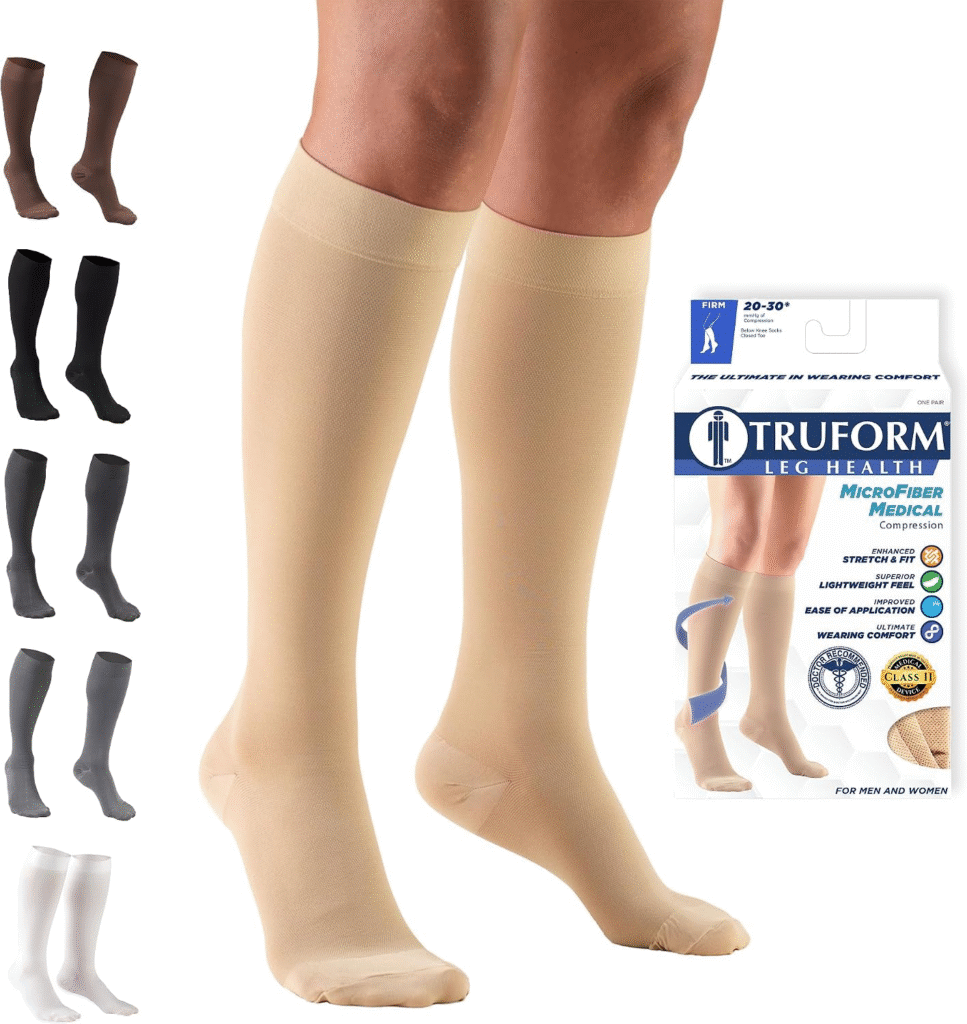
Varicose veins can be more than a cosmetic concern. For many people, enlarged veins are accompanied by aching, swelling, heaviness, itching, or tiredness that becomes worse as the day progresses. One simple option often used to manage these symptoms is compression stockings for varicose veins.
Compression stockings are specially designed to apply controlled pressure around the legs. When properly fitted and used appropriately, they can support circulation and may help improve everyday comfort. They are available in different lengths, sizes, materials, and compression levels, so choosing the right pair is important.
What Are Compression Stockings?
Compression stockings are elastic garments designed to apply pressure to the legs. Unlike ordinary socks, they are manufactured to provide a specific level of compression.
Most graduated compression stockings are tighter around the ankle and gradually become less tight toward the upper leg. This design is intended to support the normal movement of blood back toward the heart.
They can be worn as part of a daily routine, during work, while traveling, or during other activities where additional leg support may be helpful.
Why Do Varicose Veins Cause Discomfort?
Veins in the legs have the difficult job of returning blood to the heart against gravity. Small valves inside the veins normally help prevent blood from moving backward.
When these valves don’t function efficiently, blood can collect in the veins. Increased pressure can cause veins to become enlarged and twisted.
This may lead to symptoms such as:
- Swollen ankles
- Aching legs
- Heaviness
- Tiredness
- Itching
- Cramping
- General discomfort
Symptoms can become more noticeable after long periods of standing or sitting.
How Compression Stockings May Help
Compression stockings provide external pressure around the legs. This pressure supports the veins and surrounding tissues and can help encourage blood to move upward.
The compression may also help limit the amount of fluid that accumulates in the lower legs. For some people, this means less swelling and a more comfortable feeling throughout the day.
However, compression stockings don’t repair damaged valves or remove existing varicose veins. Their main role is generally symptom management and support.
Who May Benefit From Compression Stockings?
People with mild or moderate symptoms may find compression stockings useful as part of their daily routine.
They may be particularly practical for individuals who:
- Stand for many hours at work
- Sit at a desk for extended periods
- Experience swelling later in the day
- Travel frequently
- Feel that their legs become heavy or tired
- Have been advised to use compression by a healthcare professional
The appropriate compression level depends on the individual, so medical advice may be important for people with significant vein or circulation problems.
Understanding Compression Levels
Compression is measured in mmHg, which stands for millimeters of mercury. The number describes the pressure applied by the garment.
Different compression ranges are intended for different purposes. Some provide relatively light support, while others offer stronger compression for specific medical situations.
A higher number doesn’t automatically mean a better product. Using a compression level that isn’t appropriate for your needs can lead to discomfort.
If you have diagnosed varicose veins or another vascular condition, ask a qualified healthcare professional about the appropriate compression level.
Why Proper Sizing Matters
Correct sizing is essential when choosing compression stockings.
A stocking that’s too loose may slide down and fail to provide consistent pressure. One that’s too tight may be uncomfortable and difficult to wear.
Manufacturers generally provide sizing charts based on measurements such as ankle and calf circumference. Some products also require thigh circumference and leg length.
Take measurements carefully and use the sizing chart for the specific product you’re purchasing.
Knee-High vs. Thigh-High Stockings
Compression stockings come in different lengths.
Knee-High
Knee-high stockings extend from the foot to below the knee. They are convenient for everyday wear and may be appropriate when symptoms primarily affect the lower legs.
Thigh-High
Thigh-high stockings extend above the knee. They can provide compression over a larger portion of the leg.
Full-Length Options
Some compression garments cover the entire leg. These may be recommended for specific situations and aren’t necessarily required for everyone with varicose veins.
The appropriate length should depend on where symptoms occur and, when applicable, professional recommendations.
When Is the Best Time to Put Them On?
Many people find it easiest to put compression stockings on in the morning. This is because leg swelling may become more noticeable later in the day.
Make sure your skin is dry before putting them on. Position the heel and foot correctly, then gradually work the stocking upward.
Once it’s in place, smooth the fabric so there are no wrinkles or folds.
How Should Compression Stockings Feel?
Compression stockings should feel snug, but they shouldn’t cause severe pain.
It’s normal for them to feel tighter than ordinary socks. However, symptoms such as significant numbness, unusual discoloration, severe discomfort, or persistent tingling shouldn’t be ignored.
If this happens, remove the stockings and seek professional advice.
Wearing Compression Stockings During Work
People who stand for long hours may experience tired or swollen legs by the end of a shift. Compression stockings can provide additional support during the workday when appropriate.
They’re also useful for people whose jobs involve long periods of sitting. Even with compression stockings, it’s helpful to take regular movement breaks whenever possible.
Walking for a few minutes, changing positions, and moving the ankles can help prevent prolonged inactivity.
Compression Stockings for Travel
Long-distance travel can involve several hours of sitting. Compression stockings are sometimes used during extended travel to provide additional leg support.
If you’re planning a long trip and already have a vein or circulation condition, discuss compression with a healthcare professional beforehand.
Regardless of whether you wear compression stockings, try to move regularly during long journeys when it is safe and practical to do so.
Caring for Compression Stockings
Good care can help maintain the elasticity of compression stockings.
Always follow the manufacturer’s washing instructions. Excessive heat or unsuitable washing methods may damage the elastic fibers.
Inspect your stockings regularly. If they become stretched, damaged, thin, or loose, they may need replacement.
A stocking that has lost its elasticity may no longer provide consistent compression.
Common Questions About Compression Stockings
Can compression stockings remove varicose veins?
No. Compression stockings generally don’t remove existing varicose veins. They are primarily used to help manage symptoms and support circulation.
Can you wear compression stockings every day?
Some people wear them daily, particularly when recommended by a healthcare professional. The appropriate schedule depends on the individual and the reason for using compression.
Are tighter stockings better?
Not necessarily. The correct compression level is more important than simply choosing the strongest option.
Can compression stockings help with swollen ankles?
They may help manage certain types of lower-leg and ankle swelling, particularly when swelling is related to venous circulation problems.
When to Speak With a Healthcare Professional
Compression stockings aren’t suitable for everyone. People with certain conditions affecting blood flow to the legs may need professional assessment before using compression.
You should also seek medical advice if varicose veins cause persistent or worsening pain, significant swelling, skin changes, ulcers, or bleeding.
Sudden swelling, warmth, redness, or severe pain affecting one leg should receive prompt medical attention.
Final Thoughts
Choosing compression stockings for varicose veins can be a practical way to support comfortable legs and manage symptoms such as swelling, heaviness, aching, and tiredness.
The most important factors are proper fit, suitable compression, and correct use. Compression stockings don’t cure varicose veins, but they may provide valuable symptom relief for some people.
If you’re unsure which compression level or stocking style is right for you, especially if you have an existing circulation problem, professional guidance can help you make a safer and more informed choice.